
Our latest industry survey takes the temperature of life in private markets: the pressure, the coping mechanisms, the summer escape plans, and the one question nobody in the industry can avoid anymore. What is AI actually doing to the job?


We asked how the pressure of their private markets role has impacted their personal life over the past 12 months. The headline finding is familiar: the work does not stay at work. Almost half of all respondents struggle to fully switch off outside working hours, over a quarter have felt mentally overwhelmed, and a similar number have let hobbies, plans, or self-care slide to keep up.
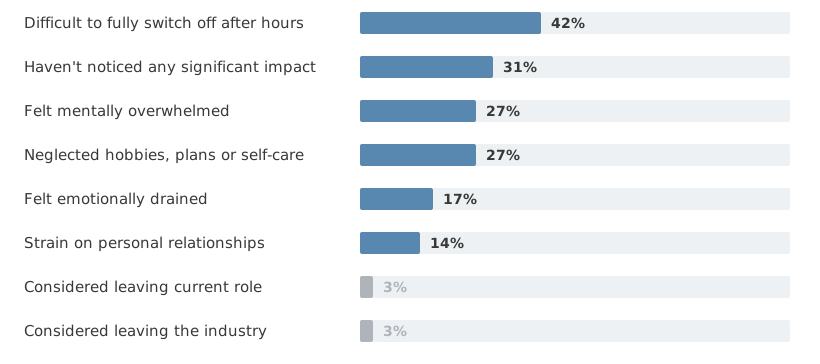
But the comparison with last year holds good news. In 2025, over a fifth had seriously thought about leaving their role or the industry; this year only a handful pointed to either, and reports of strained relationships and emotional exhaustion are also down. The pressure is real and persistent, yet fewer people seem to be at breaking point.
The strategies people lean on are reassuringly low-tech. Getting outside topped the list again, with more than half clearing their heads on a walk or a run, closely followed by carving out proper time with family or friends, phone face-down.
Two things stood out. Boundaries with devices remain weak: fewer than one in ten put their work phone away after 6 PM, almost exactly where it sat last year. And the kitchen is once again a release valve. Last year it was dicing vegetables; this year respondents confessed to reorganising the fridge "until the vegetables understand who is in charge."
This is the year AI became part of the working day, so we asked directly: has it made the job more manageable? 40% say it is genuinely saving them time. But almost a third say it has simply raised the bar for what is expected of them, and a similar share have seen no change yet, though they live in hope.
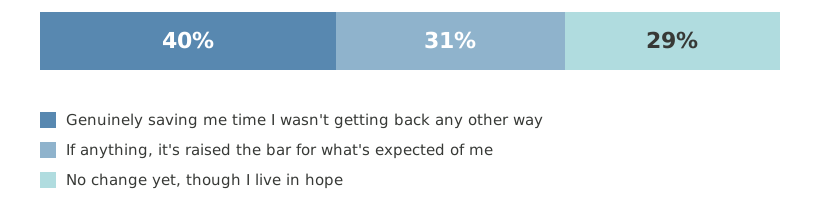
The free-text answers added the nuance. The mood was cautious optimism: a strong starting point for research and drafting, as long as you learn to use it well. Several flagged that the value is uneven, best where there is unstructured data and time pressure, and that hallucinations and confident-but-wrong outputs are a serious risk in an investment context. "Hard to know what to trust," one wrote, "most of the education comes from people with a vested interest."
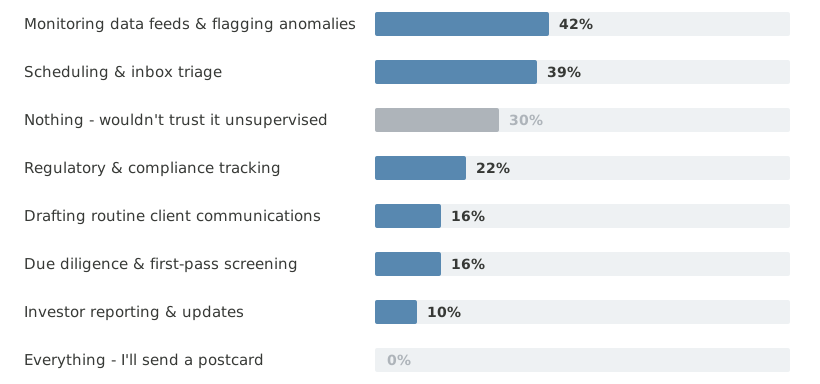
That caution showed when we asked what people would hand to an AI before a holiday. The top choice was monitoring data feeds and flagging anomalies, then scheduling and inbox triage. Nearly three in ten would trust it with nothing unsupervised. The appetite is for a capable assistant, not an autopilot, and nobody is willing to let it near the waterfall.
The holiday remains the real reset. A beach with no Wi-Fi was the most popular fantasy, named by just over half, with mountains and trails close behind. But the share who admit they "haven't even had time to think about a summer holiday yet" has risen since last year.
And switching off stays fragile. More than half said a client in crisis would snap them out of holiday mode instantly, with critical staff leaving and data security breaches close behind. A brave few said the trigger would be a WhatsApp message that opens with the words "quick one."
Relaxing is hard when you know what an unnoticed error can cost. Respondents described the fallout plainly: incorrect allocations, NAVs, and waterfall calculations leading to financial loss, regulatory scrutiny, and reputational damage that outlasts the mistake. The worst case, several noted, is an error found late or by a third party. As one put it, "minor" errors here are rarely minor; they are usually the first domino.
It explains why accuracy carried so much weight this year. Nearly nine in ten agreed that an error in their favour erodes trust almost as much as one against them. Being wrong is costly, which is why the push for better tools keeps coming from people doing the actual calculations.
We always finish by asking for the most unreasonable workplace grievance, and people delivered: the 4:59 PM complex question asked by a colleague that delays everyone's departure, the lack of napping opportunities, kids bothering you when you work from home and slovenly dressed colleagues on Zoom calls. One respondent's dog continues to interrupt calls and shows no remorse. One person spend hours investigating a discrepancy only to discover it was caused by a simple formatting issue in Excel.
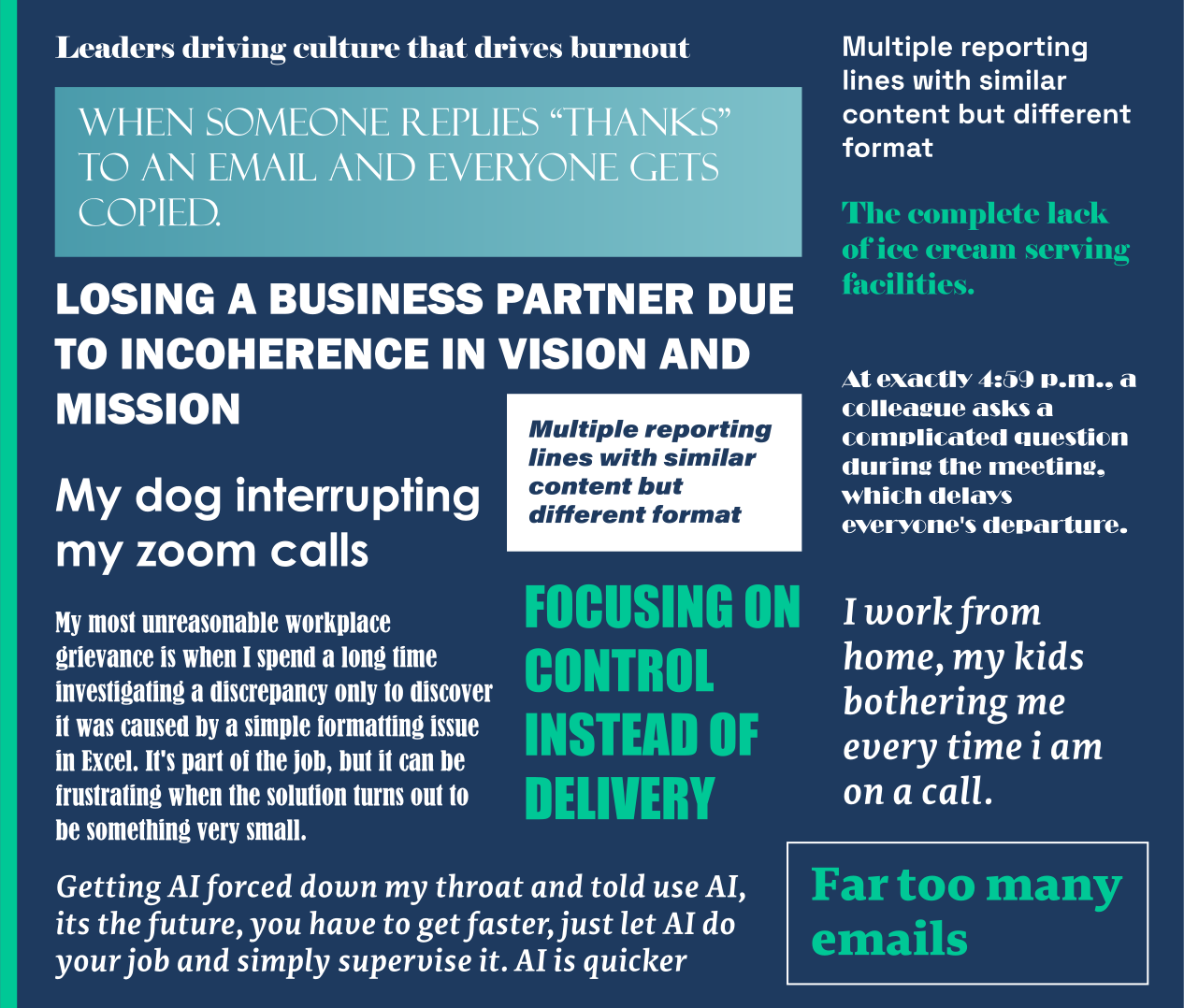
Beneath the humour, a few cut closer to the bone, including cultures that quietly drive burnout and the modern frustration of being told to "just let AI do your job and supervise it." The complexity of this industry is real, and so is the appetite for better tools that let people operate with confidence, in the office and on the beach.
Stay tuned for next year's edition!


